
Tofu and soya chunks are both plant-based protein sources that are popular in many vegetarian and vegan dishes. While tofu is a soy-based product that is known for its versatility, soya chunks are a textured vegetable protein that offer a unique texture and flavor. In this article, we’ll compare tofu and soya chunks to help you decide which one is the better option for your diet.
What Are Tofu And Soya Chunks?
Tofu and soya chunks are both popular plant-based protein options made from soybeans. They offer various nutrients and can serve as versatile ingredients in a variety of dishes. Let’s dive deeper into what each of these soy products is and how they differ from each other.
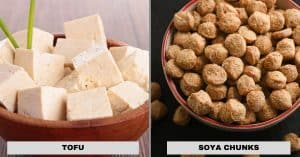
Tofu, also known as bean curd, is created by coagulating soy milk and pressing the resulting curds into blocks. It has a soft, smooth texture and is a good source of protein and calcium, making it a common choice for those seeking a healthy, vegetarian-friendly food option ^(1^). Tofu comes in varying degrees of firmness, which allows it to be used in numerous recipes, such as stir-fries, soups, and even desserts.
Soya chunks, on the other hand, are made from defatted soy flour and are considered a type of textured vegetable protein. They possess a firmer, meat-like texture and boast a higher protein content than tofu, offering an excellent meat substitute for vegetarians and vegans alike ^(2^). Soya chunks can be used in a range of dishes, including stews, curries, and salads.
There are other soy-based products like tempeh and soy sauce that play essential roles in the culinary world. Tempeh is a traditional soy product prepared by fermenting whole soybeans and forming them into cakes. This process preserves more of the bean’s nutrients compared to tofu, which is made from soy milk ^(3^).
When it comes to nutritional content, soybeans, tofu, and soya chunks each provide unique offerings. Soybeans are rich in iron, fiber, vitamins B2 and B6, potassium, phosphorus, and magnesium ^(4^). Tofu is an excellent source of calcium, selenium, and manganese. In comparison, soya chunks, being derived directly from soybeans, retain many of the bean’s nutrients while offering a solid protein option for those looking to reduce or eliminate animal products from their diet.
In conclusion, both tofu and soya chunks are versatile, nutrient-dense options for incorporating plant-based proteins into a well-rounded diet. Each has its unique textures and characteristics, making them suitable for various dishes and tastes. Their popularity continues to grow as more people seek vegetarian and vegan alternatives for their nutritional needs.
Nutritional Comparison
Calories And Macronutrients
When comparing tofu and soya chunks, they offer different nutritional profiles. Tofu is a soybean curd made by coagulating soy milk, while soya chunks are textured vegetable protein derived from defatted soy flour. A half-cup serving (126g) of firm tofu prepared with calcium sulfate contains 181 calories, 11g of fat, 3.5g of carbohydrates, and 21.8g of protein1. On the other hand, soya chunks boast a higher protein content, making them an excellent meat substitute for vegetarians and vegans2.
Vitamins And Minerals
Both tofu and soya chunks provide a variety of essential vitamins and minerals. Tofu is a good source of calcium (861mg), manganese (1.5mg), selenium (21.9mcg), and iron (3.4mg) for a half-cup serving3. Soya chunks also offer some of these minerals but in different amounts.
Furthermore, soybeans, the main ingredient in both tofu and soya chunks, are higher in iron, fiber, vitamin B2, vitamin B6, potassium, phosphorus, and magnesium compared to tofu4. However, tofu is higher in calcium, selenium, and manganese, covering 58% more of your daily calcium needs than soybeans4.
Fiber And Sugar
Tofu is a low-carb food with only 3.5g of carbohydrates per half-cup serving, out of which 2.9g is fiber3. Soya chunks contain a higher fiber content compared to tofu, contributing to their firmer, more meat-like texture2. The presence of fiber in both tofu and soya chunks aids in digestion and helps maintain a healthy weight, while their low sugar content makes them suitable for people monitoring their sugar intake.
In summary, both tofu and soya chunks are nutritionally dense options for individuals seeking plant-based protein alternatives. They offer a variety of vitamins, minerals, and fiber, promoting overall health and well-being, without being high-calorie sources or containing excessive amounts of sugar.
Footnotes
- <a href=”https://www.verywellfit.com/tofu-nutrition-facts-calories-and-health-benefits-4113988″>Verywell Fit</a> ↩
- <a href=”https://askanydifference.com/difference-between-tofu-and-soya-chunks/”>Ask Any Difference</a> ↩ ↩2
- <a href=”https://www.healthline.com/nutrition/what-is-tofu”>Healthline</a> ↩ ↩2
- <a href=”https://foodstruct.com/compare/soybean-vs-tofu-raw-regular-preparedwithcalciumsulfate”>Food Struct</a> ↩ ↩2
Health Benefits And Potential Risks
Cardiovascular Health
Tofu, which is made from soy, contains high levels of isoflavones that are linked to a decreased risk of cardiovascular diseases 1. These soy isoflavones may help improve heart health by reducing cholesterol levels and promoting healthy blood vessels. Similarly, soya chunks are beneficial for cardiovascular health, as they are rich in protein and low in saturated fats.
Cancer Prevention
The isoflavones in tofu and soya chunks may help reduce the risk of certain types of cancer, including breast and prostate cancer. However, it is essential to note that excessive consumption of tofu could potentially lead to estrogen-sensitive breast tumors. Soya chunks, on the other hand, mostly have positive effects on bone health and digestion but could decrease testosterone levels when consumed in large amounts 2.
Menopause Relief
Isoflavones in tofu and soya chunks have estrogen-like effects, which can alleviate menopause symptoms, such as hot flashes. The phytoestrogens present in these soy products may help balance hormone levels and provide relief for many women experiencing these uncomfortable symptoms during menopause.
Osteoporosis
Both tofu and soya chunks contain essential minerals, such as calcium and manganese, that promote bone health. Tofu prepared with calcium sulfate is an excellent source of calcium, providing approximately 66% of the daily value (DV) 3. This helps reduce the risk of osteoporosis, especially in postmenopausal women who are more susceptible to this condition.
Type 2 Diabetes
The consumption of tofu and soya chunks has been linked to a reduced risk of type 2 diabetes. These high-protein, low-fat soy products can aid in weight management and help regulate blood sugar levels, which ultimately contributes to managing and preventing diabetes.
Despite the numerous health benefits associated with tofu and soya chunks, it is essential to consume them in moderation to avoid any potential risks. Also, choose organic and non-GMO soy products whenever possible to ensure the highest quality and avoid adverse effects on the environment.
Footnotes
Tofu And Soya Chunks As Vegan And Vegetarian Options
Meat Substitute Options
Tofu and soya chunks are popular meat substitute options for vegans and vegetarians, as they provide valuable protein and essential nutrients. Both products are made from soybeans and serve as healthy alternatives to traditional meat sources. Tofu is created by coagulating soy milk and pressing it into soft white blocks, while soya chunks are made from defatted soy flour source. These soy-based choices are known to be high in protein, vitamins, and minerals.
As complete proteins, tofu and soya chunks contain all the essential amino acids our bodies require. For example, 100 grams of tempeh, a type of fermented tofu, contains 20 grams of protein source. Soya chunks also provide antioxidants and help with digestion and bone health, making them an excellent option for menopausal women.
In addition to their nutritional benefits, both tofu and soya chunks are versatile ingredients that can easily absorb flavors from other ingredients in a dish. This makes them perfect for use in a wide array of recipes and cuisines.
Menu Ideas
Here are some menu ideas using tofu and soya chunks as meat alternatives:
- Tofu stir-fry: Cube and fry tofu, then mix with your favorite vegetables, soy sauce, and spices for a simple yet satisfying meal.
- Tofu scramble: Crumble tofu, season with turmeric and nutrition yeast, and cook in a non-stick pan for a vegan take on scrambled eggs.
- Grilled soya chunk kebabs: Soak soya chunks in water, skewer, and grill with a medley of vegetables, spices, and sauces for a delicious alternative to meat kebabs.
- Soya chunk curry: Cook soya chunks in a rich tomato and onion gravy, seasoned with aromatic Indian spices for a hearty curry dish.
- Tofu lasagna: Layer tofu with veggies, sauce, and dairy-free cheese in a baking dish to create a vegan-friendly lasagna.
Integrating tofu and soya chunks into your vegetarian or vegan diet can make meal planning more diverse and enjoyable. With their protein content, health benefits, and versatility, these soy-based options continue to be popular choices for those looking to move away from traditional meat sources.
Flavor, Texture And Preparation
Types Of Tofu
Tofu, also known as bean curd, is made from soybeans, water, and a coagulant, often nigari (magnesium chloride) or gypsum (calcium sulfate) source. There are different types of tofu, including soft, firm, and extra firm. Soft tofu is not pressed and has a soft, delicate texture. It’s used in soups and desserts, as well as in dishes where a smooth consistency is desired. Firm tofu is pressed for a longer time, resulting in a denser texture that holds its shape better in dishes like stir-fries, while extra firm tofu is even denser and can be sliced or cubed source.
Silken tofu is another type of tofu that has a soft and silky texture, making it suitable for blending into sauces or using in desserts like pudding. It’s also a common ingredient in miso soups source.
Types Of Soya Chunks
Soya chunks are textured vegetable protein derived from defatted soy floursource. They are high in protein and essential amino acids, making them an excellent meat substitute for vegetarians and vegans. Soya chunks have a firmer, more meat-like texture compared to tofu. They can be cooked in various ways, including boiling, baking, and deep-frying.
Cooking Methods
Both tofu and soya chunks are known for their ability to absorb flavors from spices and marinades. They can be prepared in a variety of ways:
- Tofu can be sliced, cubed, or scrambled, depending on the type and desired texture.
- Soft tofu is often boiled or used in soups.
- Firm and extra-firm tofu can be pan-fried, stir-fried, or baked.
- Silken tofu can be blended into sauces, used in desserts, or eaten as is in some Asian cuisines.
- Soya chunks can be boiled, baked, deep-fried, or added to casseroles.
Using Tofu And Soya Chunks In Recipes
When using tofu or soya chunks in recipes, it’s essential to consider their unique properties:
- Tofu should be pressed to remove excess water before cooking, particularly for firm and extra-firm varieties.
- Both tofu and soya chunks should be marinated for at least 30 minutes to absorb flavors before cooking.
- If substituting tofu or soya chunks for meat in a recipe, adjust cooking times accordingly, as both may cook faster than meat.
- Experiment with different types of tofu and soya chunks to determine which texture and flavor work best for your recipes.
Manufacturing Process And Industry Insights
The production of both tofu and soya chunks begins with the versatile soybean. To make tofu, manufacturers start by soaking soybeans and then extracting the soy milk. A coagulant, typically nigari or calcium sulfate, is added to the soy milk, resulting in a curdled consistency (source). The mixture is then simmered, with the coagulant carefully added at specific times and temperatures. Finally, the curds are pressed into solid white blocks (source).
Soya chunks, on the other hand, are made from defatted soy flour, a byproduct of soybean oil production. The soy flour is mixed with water to create a dough, which is then extruded and cut into small pieces. These pieces are then cooked and dried to produce soya chunks, offering a gluten-free, high-protein alternative to meat (source).
In the global market, China is the largest producer and consumer of soybean products, including tofu and soya chunks 🔗. Major companies, such as Archer Daniels Midland, play a significant role in producing ingredients like soy flour and soy milk, supporting the overall industry (source).
With growing interest in plant-based diets and environmentally sustainable food choices, both tofu and soya chunks have gained popularity in recent years. They are versatile ingredients, easily adapted to a wide range of recipes, and can accommodate various dietary restrictions, such as being gluten-free. Additionally, non-GMO options are available for those concerned about genetically modified organisms (source).
Manufacturers are aware of these consumer preferences and are continuously working to improve the quality of their products. By experimenting with various coagulants, soaking methods, and processing conditions, they can create various textures and flavors to meet the demands of an increasingly diverse market (source).

Hey, I’m Joey. I’ve been cooking since I was a little kid and love everything about it. You can find my writing about food, kitchen appliances (such as blenders) and much more. Thanks for stopping by!
