
Tofu skin and tofu are both soy-based products that are popular in many Asian cuisines. While tofu is a versatile ingredient that can be used in a variety of dishes, tofu skin is a thin layer that is often used as a wrapper or filling. In this article, we’ll compare tofu skin and tofu to help you understand the unique characteristics of each ingredient.
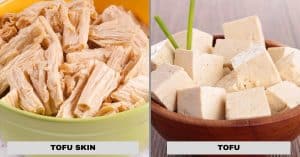
What is Tofu Skin
Tofu skin, also known as yuba, is a unique food product derived from soybeans. Widely used in East Asian cuisine, it offers a distinctive taste and texture that has garnered appreciation among both chefs and consumers. In this section, we will delve into the history and production process of tofu skin, and how it compares to regular tofu.
Yuba History
Yuba has a long history dating back over a thousand years as a staple in East Asian cuisine. Originating in ancient China, it eventually found its way to countries like Japan, Korea, and Vietnam, where it remains a popular food choice today. While tofu products have expanded throughout the globe, yuba continues to hold a special place in the culinary traditions of these regions due to its rich soybean flavor and comforting texture.
Production Process
The production of tofu skin begins with the same base ingredient as tofu: soybeans. The soybeans are first turned into soy milk, which forms the foundation for both tofu and tofu skin. The key difference lies in the treatment of the soy milk during the coagulation process.
When soy milk is heated, a thin layer of film forms on the surface. This layer of coagulated proteins is carefully skimmed off to create tofu skin. The process is repeated, allowing multiple layers to be produced from the same batch of soy milk. Once collected, the sheets of tofu skin can be either consumed fresh or dried, and even be shaped into different forms such as sticks or rolls.
Tofu, on the other hand, is made by adding a coagulant to the soy milk, causing the proteins to separate and solidify into curds. These curds are then pressed together, forming the familiar blocks of tofu found in grocery stores and restaurants.
The differences in production methods result in two distinct final products. While both tofu and tofu skin are derived from soybeans and soy milk, their textures and flavors vary significantly. Tofu skin features a higher concentration of protein and a more pronounced soybean taste, offering a unique culinary experience that sets it apart from its more widely recognized counterpart, tofu.
What is Tofu
Tofu, also known as bean curd, is a popular and versatile food made from soybeans. It is widely used in various cuisines, especially in vegetarian and vegan dishes. Tofu contains essential nutrients, including protein, calcium, and magnesium, making it a healthy food choice.
Bean Curd Origins
Tofu has its origins in ancient China, where it has been a staple food for over 2,000 years. The process of making tofu involves the use of soy milk, which is extracted from soybeans. Today, tofu has gained widespread popularity and is consumed in many countries around the world 1. Its popularity is partly due to its numerous health benefits and its ability to absorb flavors, making it an excellent choice for various culinary applications.
Making Tofu
The process of making tofu starts with soybeans, which are soaked and then ground into a pulp. This pulp is mixed with water, creating soy milk 2. The soy milk is then heated and coagulated using a coagulating agent, such as calcium or magnesium sulfate. The curdled mixture is strained, separating the solid curds from the liquid whey. These curds are then pressed into molds, where they are left to set and cool, ultimately forming the final tofu product.
Tofu comes in several varieties, depending on the degree of firmness, such as silken, soft, and firm. These different types of tofu can be used in a variety of dishes, including soups, stir-fries, and even desserts.
Footnotes
Tofu Skin vs Tofu: Taste and Texture
Tofu Skin
Tofu skin, also known as bean curd skin, is created by boiling soy milk and collecting the skin that forms on the surface. This unique tofu product has a delicate flavor that some people prefer due to its light taste and easier digestibility1. The texture of tofu skin can vary depending on how it’s prepared, but it is generally more fragile and thin compared to traditional tofu.
When cooked or hydrated, tofu skin takes on a slightly chewy texture that can mimic the taste and feel of chicken or duck, making it a popular substitute for meat2. Due to its malleable nature, it can be used fresh, dried or even in sheets, allowing for versatility in recipes and dishes3.
Tofu
Tofu, or bean curd, is made from coagulated soy milk and comes in various firmness levels, such as soft, medium-firm, firm, and extra-firm4. The difference in firmness is due to the amount of water content present within the tofu. More firm types of tofu have less moisture, making them better-suited for frying, grilling, or baking, while softer types of tofu are more suitable for blending or as a creamy component in various dishes.
Tofu has a subtle flavor that is often considered ‘neutral,’ allowing it to absorb and adapt to the flavors of the ingredients or seasonings used in a recipe. The texture of tofu can be described as somewhat rough in appearance and smooth on the inside, with firmer variants holding their shape better than softer types5.
To summarize, here are some key differences between tofu skin and tofu:
- Taste: Tofu skin has a delicate flavor that is easier to digest, while tofu has a neutral flavor that can adapt to different recipes.
- Texture: Tofu skin is thin and fragile, often with a chewy texture when cooked, while tofu has a rougher appearance and varies in firmness depending on its type.
- Uses: Tofu skin can be used fresh, dried, or in sheets and is often an ideal meat substitute. Tofu is very versatile and can be used in various cooking methods depending on its firmness level.
Footnotes
Nutritional Comparison
Protein Content
Tofu and tofu skin are both excellent sources of plant-based protein. Tofu, which is made from coagulating soy milk and pressing it into blocks, is high in protein and contains all the essential amino acids your body needs 1. A 3.5-ounce (100-gram) serving of regular, raw tofu provides around 8.1 grams of protein 2. On the other hand, tofu skin, also known as yuba, is made from the thin layer formed on top of soy milk when it is heated. It is a concentrated version of tofu, offering higher protein content with a rich soybean flavor 3.
Vitamins and Minerals
Both tofu and tofu skin are rich in vitamins and minerals. Tofu provides important minerals such as calcium, magnesium, manganese, and phosphorus, as well as vitamins like B-complex vitamins and vitamin K 1. A half-cup serving (126g) of raw, firm tofu prepared with calcium sulfate contains about 861mg of calcium and 1.5mg of manganese 4.
Tofu skin shares many of the same nutrients found in tofu, making it a healthy choice for those following a plant-based diet. Although specific nutritional information for tofu skin may vary depending on the preparation method used, it generally offers a similar nutrient profile to tofu.
Health Benefits
There are numerous health benefits associated with consuming tofu and tofu skin, making them popular choices for vegetarian, vegan, and other plant-based diets. Some of these health benefits include:
- Bone Health: Both tofu and tofu skin are rich sources of calcium, which is essential for maintaining healthy bones and preventing bone loss 24.
- Low in Calories: Tofu is known for being low in calories, making it a great option for those watching their caloric intake 2.
- Dietary Fiber: While tofu itself does not contain large amounts of dietary fiber, tofu skin boasts a unique texture and slightly higher fiber content 3.
- Heart Health: The isoflavones present in soy-based products such as tofu and tofu skin have been linked to a reduction in LDL cholesterol levels and improved heart health 5.
- Plant-based Protein: With their high protein content, both tofu and tofu skin can serve as valuable sources of plant-based protein for vegetarians and vegans 13.
In summary, both tofu and tofu skin offer an array of health benefits and are packed with essential nutrients like protein, calcium, and vitamins. These soy-based products can be an excellent choice for individuals looking for plant-based protein options or simply seeking to introduce more healthy, low-calorie foods into their diet.
Footnotes
- (https://www.healthline.com/nutrition/what-is-tofu) ↩ ↩2 ↩3
- (https://www.verywellfit.com/tempeh-vs-tofu-how-they-compare-according-to-dietitians-5176114) ↩ ↩2 ↩3
- (https://www.bonappetit.com/story/tofu-skin) ↩ ↩2 ↩3
- (https://www.verywellfit.com/tofu-nutrition-facts-calories-and-health-benefits-4113988) ↩ ↩2
- (https://www.tastingtable.com/1137303/what-is-tofu-skin-and-how-do-you-use-it/) ↩
Culinary Uses
Tofu Skin in Dishes
Tofu skin, also known as yuba or bean curd sheets, is a versatile ingredient often found in Asian cuisine. Made from the thin layer of film that forms on the surface of hot soy milk during the tofu-making process, it has a rich soybean flavor and a texture that’s both comforting and chewy 1. Fresh tofu skin can be enjoyed on its own as a delicacy or used in a variety of dishes, such as salads, soups, and stir-fries2. In Chinese New Year celebrations, for example, tofu skin rolled with a veggie-pork filling becomes a dish called “gold bars,” which is similar to a healthy spring roll3.
Tofu skin is also commonly used as a wrapper for other ingredients like dumplings, making it an excellent substitute for traditional wheat-based wrappers. Its flexibility and neutral flavor allow it to pair well with both savory and sweet ingredients, and it holds up well in various cooking methods such as frying, steaming, braising, and boiling. In hot pot, tofu skins can be cut into thin strips or left whole to provide a different texture alongside other ingredients3.
Tofu in Dishes
Tofu, also made from soybeans, is a popular ingredient in many Asian countries and has numerous culinary uses. It comes in different forms, such as soft, firm, and extra-firm, and can be used in a variety of cooking methods, including frying, grilling, and simmering4.
Some popular tofu dishes include stews and curries, where tofu acts as a sponge, absorbing the flavors of the sauces and spices it’s cooked in. In stir-fries, extra-firm tofu is often preferred due to its low moisture content, which helps it fry up quickly and with less sticking5. Aside from these dishes, tofu can also be added to soups or used as a foundation for sauces and dips.
Fried tofu, a popular way to enjoy the ingredient, becomes crispy on the outside while remaining soft on the inside, accented with a touch of salt or dipping sauce. Additionally, tofu can be found in many Asian appetizers like spring rolls, providing a protein-packed filling and adding substance to the dish.
Beyond well-known dishes, tofu can also be sliced into sticks and skewered for grilling, a popular method in some Asian countries4. Tofu’s versatility shines through in myriad recipes, so there’s always something new to try with this adaptable ingredient, whether it’s used in salads, hot pots, or even desserts.
To summarize, both tofu skin and tofu offer a wide range of culinary uses, thanks to their neutral flavor and ability to work well with various cooking techniques. Both ingredients are staples in many Asian dishes and provide unique textures that can enhance any recipe they’re featured in.
Footnotes
Storing and Availability
Storage Tips
When it comes to storing tofu skin and tofu, different methods can be employed to keep them fresh and tasty. For tofu skin, it can be stored in the refrigerator for up to a week, and it can also be frozen for later use.
On the other hand, storing tofu requires a specific approach. Sealed tofu can be stored in the fridge for up to 3 months. However, once the original packaging is open, tofu should be kept in the refrigerator for 3-5 days before it starts to lose its flavor. When freezing tofu, place it in a clean, freezer-safe bag and store it for up to three months. It’s crucial not to keep tofu at room temperature for too long, as it may spoil.
Where to Buy
Bean curd skin and tofu are commonly available in different locations, depending on your region. The easiest place to find both of these soy-based products is at an Asian market. These specialty stores usually have a wide selection of tofu and tofu skin varieties, giving you the opportunity to choose the ones that best suit your culinary needs.
If Asian markets are not accessible, local grocery stores often carry tofu in their refrigerated sections. Tofu skin, on the other hand, may be slightly harder to find in a traditional supermarket. However, it’s becoming more popular due to its unique flavor and texture, so you might be lucky enough to spot some in the store’s international or specialty food aisles.
In summary, when storing tofu skin and tofu, they can be kept in the refrigerator, while tofu can also be frozen for longer periods. To purchase these items, the best locations are Asian markets or local grocery stores, ensuring a fresh and delicious experience when cooking with these versatile ingredients.
Alternative Protein Sources
When looking for alternative protein sources to tofu, tofu skin, or yuba, could be an attractive option for individuals seeking plant-based diets or meat substitutes. Tofu skin is produced from the “skin” that forms on the top of soy milk when it is heated during the tofu-making process. Compared to tofu, yuba is four times higher in protein and fat content 1.
Yuba is versatile in its culinary uses as it is sold in sheets and can be cut into noodle strips, offering an exciting alternative to traditional tofu dishes. In addition to being protein-packed, tofu skin is also a great source of iron, making it an appealing choice for those on a vegetarian or vegan diet.
Another alternative to tofu is tempeh, a fermented soy product that has a denser texture than tofu. Tempeh is made from whole soybeans and is higher in fiber compared to tofu 2. Tempeh serves as a protein-packed and healthy plant-based option, thanks to its ability to absorb flavors and a good iron source.
Consider seitan as another meat substitute, which is made from wheat protein, known as gluten. While it may not be suitable for those with celiac disease or gluten sensitivity, this protein source has a meat-like texture and also offers a protein-rich option. Seitan is a versatile ingredient and can be used in various dishes, making it an attractive alternative to tofu.
To recap, here are some alternative protein sources for a meat substitute or a plant-based diet:
- Tofu skin (yuba): 4x higher in protein and fat than tofu
- Tempeh: made from whole soybeans, higher in fiber and iron
- Seitan: made from wheat protein (gluten), offers a meat-like texture
Exploring different protein-packed alternatives to tofu can bring variety and excitement to a plant-based diet. Remember to consider your dietary needs and preferences when choosing meat substitutes or other protein sources. There is a world of exciting and nutritious plant-based options to discover and enjoy.
Footnotes
Tofu and Tofu Skin in International Cuisine
Chinese Cuisine
In Chinese cuisine, tofu is a versatile ingredient and comes in various forms. Tofu skin, also known as Fuzhu or Yuba, is made from the thin, delicate film that forms on the surface of soy milk during the tofu-making process. Fuzhu has been a staple in Chinese dishes for over a thousand years, particularly in Buddhist meals, due to its high protein content and unique texture. It can be found fresh or dried, with dried Yuba being an excellent addition to dishes like soups, stews, and stir-fries.
Traditional Chinese tofu dishes can also feature deeper flavors, adding extra appeal to tofu skin’s distinct texture. For example, tofu skin can be used in a variety of dishes, ranging from braised dishes with soy sauce and spices to delicate spring rolls or Sichuan-style Mapo tofu.
Other Asian Cuisines
In other Asian countries, tofu is utilized creatively and abundantly. Japanese cuisine offers a distinct approach to tofu skin. One popular dish is inari sushi, which consists of seasoned rice stuffed into square slices of tofu skin. Tofu skin’s versatility shines through as it’s stuffed or rolled into tasty sushi creations.
Korean cuisine often incorporates tofu and tofu skin into delicious soups and stews. Sundubu jjigae, a traditional Korean dish, combines soft tofu with various vegetables, meats, and seafood in a spicy broth. Tofu skin can be added for an extra layer of texture and flavor.
In Vietnamese dishes, tofu skin is often used in chả lụa, a type of Vietnamese sausage. Here, tofu skin is used as a wrapper, encasing ground pork, mushrooms, and vegetables, which is then steamed and commonly served as a side dish.
Tofu skin’s unique texture, nutritional value, and versatility make it a popular ingredient in various Asian cuisines. It enhances dishes, providing additional protein and a pleasing mouthfeel while absorbing flavors from surrounding ingredients.
Tofu Products with Meat-like Textures
When it comes to tofu skin and tofu, both offer unique culinary properties and can be prepared to imitate the texture and taste of meat. In particular, tofu skin, also known as bean curd skin, is formed when soy milk is boiled and a thin layer forms on the surface. This versatile ingredient can be used in various dishes to create meat-like textures.
Tofu skin can be purchased fresh, dried, or frozen, and is popularly utilized as a wrapper for stuffed dishes similar to dumplings. Since tofu skin is quite thin, it can absorb flavors from marinades and seasoning quite effectively. Moreover, thinly sliced tofu skin can be used to imitate sliced meats, such as pork or beef, and works well in dishes with peppers and other vegetables.
In comparison, medium-firm tofu boasts a denser texture than soft and silken tofu but remains more delicate than extra-firm varieties. With a rougher appearance and moderate moisture content, medium-firm tofu is capable of holding its shape better than soft tofu. To achieve a meatier texture, the tofu can be pressed to expel excess water. This allows it to absorb flavors well and make it ideal for dishes that incorporate pork or other meats.
When preparing tofu products to mimic meat textures, consider the following techniques:
- Freezing and thawing tofu before cooking can help create a chewier texture.
- Marinating tofu in sauces with strong flavors like soy sauce, garlic, or ginger can enhance the meat-like taste.
- Pan-frying or grilling tofu can provide a crispy exterior and a satisfying chewiness.
In summary, both tofu skin and medium-firm tofu are versatile ingredients that can be prepared to imitate the texture and taste of meat, such as pork. Experimenting with various cooking methods and flavor profiles, such as incorporating peppers or other vegetables, can lead to satisfying, meat-like dishes suitable for vegans and non-vegans alike.

Hey, I’m Joey. I’ve been cooking since I was a little kid and love everything about it. You can find my writing about food, kitchen appliances (such as blenders) and much more. Thanks for stopping by!
